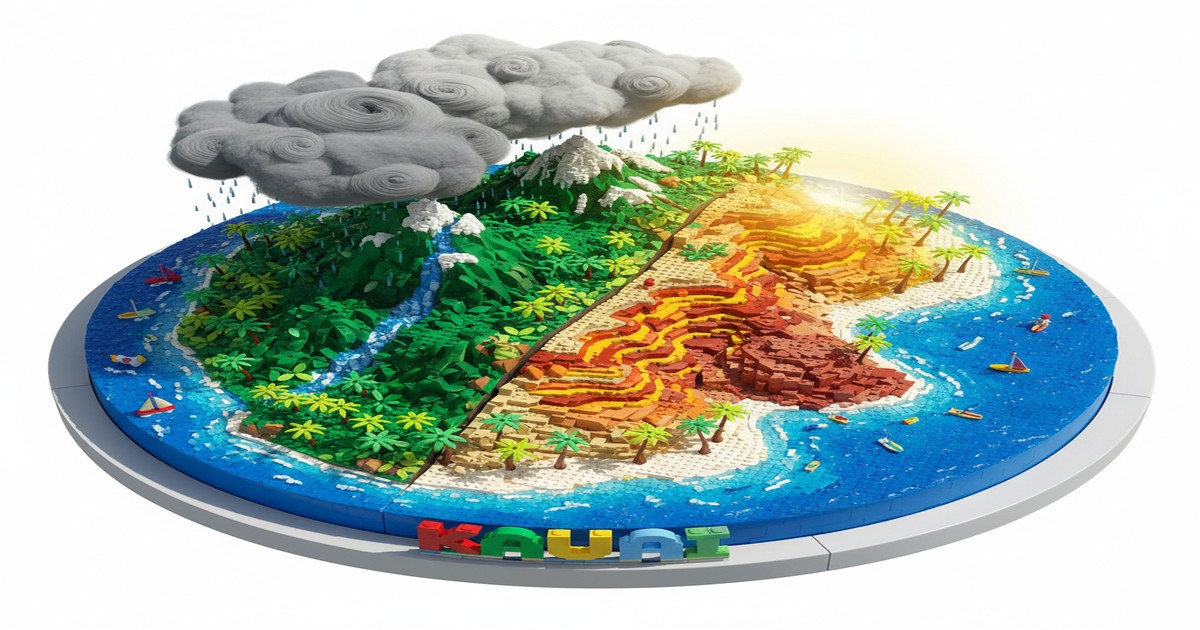
Shoots! Let me break down something that confuses pretty much every first-time visitor to Kauai - the weather here is wild, brah. I'm talking about how it can be pouring rain on one side of the island while the other side is sunny and dry. Understanding Kauai's climate isn't just about checking a weather app - it's about knowing which microclimate you're heading into and planning accordingly. Trust me, after years of living here, I've learned to read these patterns like the back of my hand 🤙
The Wettest Spot on Earth (No Joke)
Here's the thing that blows everyone's mind: Mount Waialeale, right in the center of our island, is literally one of the wettest spots on planet Earth. We're talking 450+ inches of rain per year up there. That's not a typo - over 37 feet of rain annually. The mountain top gets rained on about 335 days a year.
But here's what makes Kauai's climate so fascinating - you can be standing on a beach 15 miles away in near-desert conditions while Waialeale is getting absolutely dumped on. It's all about understanding the rain shadow effect, which I'll break down for you.
Understanding the Rain Shadow Effect
The way Kauai's climate works is pretty scientific but super practical once you get it. The trade winds blow from the northeast, carrying moisture from the ocean. When that moist air hits our mountains, it rises, cools down, and releases all that water as rain on the windward (northeast) side.
By the time those winds make it over the mountains to the leeward (southwest) side, they've already dropped most of their moisture. That's why we call it a "rain shadow" - the mountains literally create a shadow where rain doesn't fall as much.
What this means for you:
- North Shore and East Side = wetter, greener, more lush
- South Shore and West Side = drier, sunnier, more desert-like
- Central mountains = forget about it, always raining
North Shore Climate (Hanalei, Princeville, Kilauea)
The North Shore gets the full force of those trade winds, and lemme tell you, it shows. This area averages 85+ inches of rain per year in some spots. But don't let that scare you off - it's what makes places like Hanalei Valley so incredibly green and beautiful.
Typical conditions:
- More rain October through March
- Brief afternoon showers common even in "summer"
- Temps stay pretty consistent: 70-85°F year-round
- Higher humidity than other parts of the island
I always tell people heading to Ke'e Beach or the Na Pali Coast to check conditions that morning, not the day before. Weather here can change fast. You might start your day in sunshine and end up in a downpour by noon.
Pro tip: Pack a light rain jacket even if it looks sunny. The North Shore doesn't mess around with its microclimates.
South Shore Climate (Poipu, Koloa)
Now we're talking about my favorite weather pattern on the island. The South Shore sits in that beautiful rain shadow, making it the driest and sunniest part of Kauai. Poipu Beach gets only about 35 inches of rain per year - that's less than most mainland cities.
What to expect:
- Sunny most days, especially May through September
- Light morning trade winds
- Occasional afternoon clouds that usually burn off
- Perfect beach weather pretty much year-round
The South Shore averages temps from 75-85°F, with water temps staying comfortable at 75-80°F. This is why you'll see me at Poipu on my days off - consistent sunshine, warm water, and way fewer rain interruptions than the North Shore.
East Side Climate (Kapaa, Wailua, Lihue)
The East Side is where most locals live, and the climate is a big reason why. It's kind of the goldilocks zone - not too wet, not too dry, just right. Kapaa and Wailua get moderate rainfall (around 50-60 inches annually), but it's usually those quick tropical showers that come and go.
Climate characteristics:
- Morning sun is pretty reliable
- Afternoon showers common but brief
- Trade winds keep things comfortable
- Less extreme than North or South Shore
Living in Kapaa, I've learned that if it's raining at 7am, it'll probably be sunny by 10am. The East Side weather moves fast, which is actually perfect for daily life. You're not stuck with all-day rain like you might get up North.
West Side Climate (Waimea, Kekaha)
The West Side is straight-up different from the rest of Kauai. We're talking desert-like conditions in some areas - Kekaha gets less than 20 inches of rain per year. It's hot, dry, and feels more like Arizona than Hawaii sometimes.
West Side weather:
- Hottest temps on the island (can hit 90°F+)
- Very little rain year-round
- Strong afternoon winds
- Red dirt everywhere (it's dry!)
If you're heading to Polihale or Waimea Canyon, bring extra water and sunscreen. The West Side sun hits different, and there's not much shade out there. I've seen too many tourists get cooked because they weren't prepared for how intense it can be.
Seasonal Patterns You Need to Know
Okay, so Kauai doesn't really have "seasons" like the mainland, but we definitely have weather patterns:
November through March (Wet Season):
- More frequent rain across the island
- North Shore can get big surf (20-30+ feet)
- Still warm (70-80°F), just wetter
- This is our "winter" but you can still swim
April through October (Dry Season):
- Less rain overall, especially South and West
- Calmer ocean conditions
- Hotter temps, especially West Side
- Best time for clear hiking and beach days
The 2025 dry season just wrapped up, and it was actually the third driest in 30 years statewide. But here on Kauai? We stayed wetter than usual compared to the other islands. That's just how our microclimates work.
Best Times to Visit Each Area
Based on climate patterns, here's my honest take:
North Shore: May through September for the best weather, but November through March if you want to see massive surf (just know it'll be wetter)
South Shore: Literally any time. This is why Poipu is packed year-round - the weather rarely disappoints
East Side: Year-round is fine, but April through October gives you more consistent sun
West Side: Avoid mid-summer unless you love extreme heat. Spring and fall are perfect
What to Pack for Kauai's Climate
Forget what you think you know about Hawaii packing lists. Here's what actually works for Kauai's diverse microclimates:
- Light rain jacket (not a poncho - those blow away)
- Reef-safe sunscreen (the sun here is no joke)
- Quick-dry clothes (humidity is real)
- Light layers (mornings can be cool, especially up North)
- Water shoes (for rocky beaches and streams)
- Reusable water bottle (stay hydrated in our heat)
I keep all this stuff in my truck year-round because you never know when you'll switch from sunny South Shore to rainy North Shore in the same day.
Real-Time Weather Tips
Here's what locals actually do to track Kauai's climate:
Check conditions by area, not island-wide forecasts. The weather apps that show "Kauai weather" are basically useless because they don't account for microclimates. Look at specific town forecasts instead.
Watch the mountains. If you can't see the peaks, they're getting rain. That rain will eventually work its way down to you if you're on the windward side.
Trade winds are your friend. When they're blowing steady (15-20 mph), the weather tends to be more stable and comfortable. When they die down, it can get muggy and unpredictable.
Climate Change and Kauai
Real talk - we're seeing changes. Sea surface temperatures around Kauai have been running +0.0 to +1.0°C warmer than normal, with the warmest anomalies around our area. The dry seasons are getting drier, and when it rains, it's more intense.
This affects everything from coral health to hiking trail conditions. I'm not gonna get all doom and gloom, but it's something to be aware of. Respect the ocean, check trail conditions before hiking, and don't take risks just because it looks calm.
⚠️ Always check current conditions before heading out to beaches or trails. When in doubt, don't go out! 🌊
Planning Your Days Around Microclimates
Here's my strategy that works every time: Start your day on the sunny side (usually South or West), then head to the wetter side (North or East) in the afternoon if you want. That way, even if you hit afternoon showers, you've already gotten your beach time in.
If you wake up and it's raining where you're staying, don't panic. Drive 20 minutes in any direction and you'll probably find sun. That's the beauty of Kauai's climate - there's almost always good weather somewhere on the island.
For more ideas on where to explore based on current conditions, check out all the activities and spots we've got mapped out across different microclimates.
Bottom Line on Kauai Climate
Understanding Kauai's climate isn't about memorizing statistics - it's about knowing that this island has basically every weather pattern you can imagine, sometimes all happening at once. The wettest spot on Earth sits right next to desert-like beaches. Rain shadow effects create dramatically different conditions just miles apart.
My advice? Embrace it. Pack smart, stay flexible with your plans, and don't let a little rain stop you from exploring. Some of my best island memories happened in the rain - waterfalls flowing hard, rainbows everywhere, and empty beaches because everyone else stayed in their hotel.
The climate here is what makes Kauai special. It's why we have those dramatic green cliffs, why the waterfalls never stop flowing, and why every part of the island feels completely different.
Questions about weather conditions or where to go based on current climate? Chat with me at https://alohakai.ai 🤙