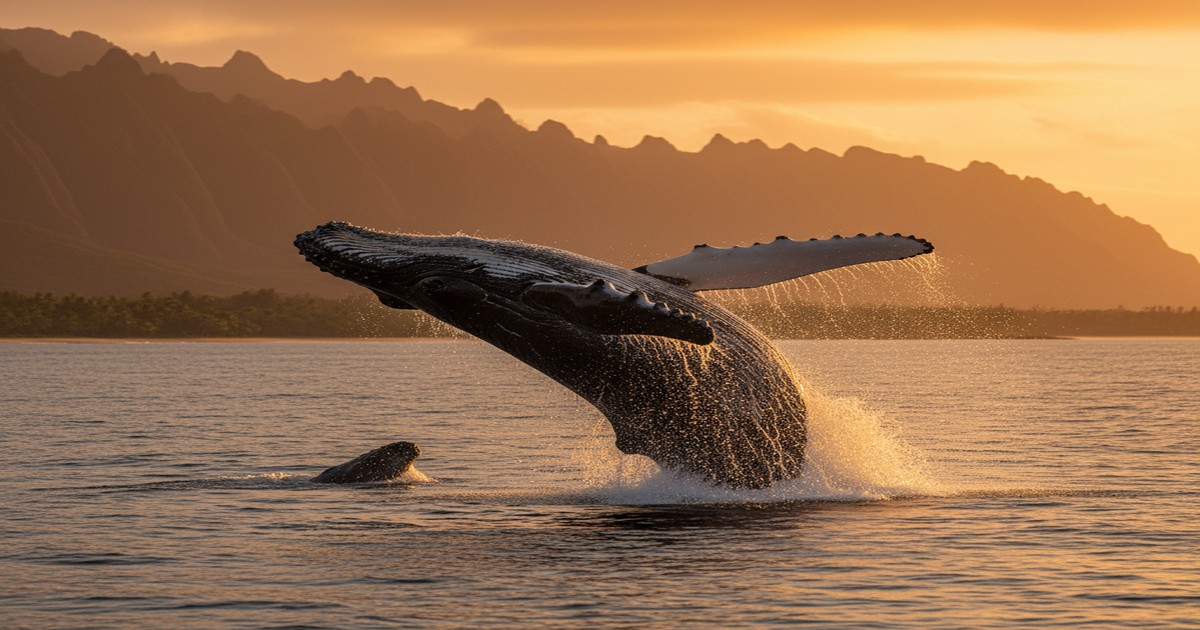
Every winter, something magical happens off Kauai's coast. Humpback whales - these massive, 40-ton ocean giants - swim over 3,000 miles from Alaska to our warm Hawaiian waters. And lemme tell you, watching a 50-foot whale breach right in front of you? That's the kind of moment that makes you forget to breathe 🐋
I've been whale watching on Kauai for years, and it never gets old. Whether you're spotting them from shore with your morning coffee or getting up close on a boat tour, these gentle giants always deliver an unforgettable show. Here's everything you need to know about whale watching Kauai style.
When Is Whale Season on Kauai?
The official whale watching season runs from December through April, with peak activity happening January through March. This is when humpback whales migrate from the cold Alaskan waters to Hawaii's warm, protected channels to mate, give birth, and raise their calves.
Here's the breakdown:
November-December: Early arrivals start showing up
January-March: Peak season - this is when you'll see the most whales and the most action
April: Stragglers heading back north
I always tell people to aim for January through March if they can. That's when you'll see the most breaching, tail slaps, and playful behavior. The whales are more active because they're competing for mates and showing off for each other 🤙
Why Humpbacks Choose Hawaii
These whales aren't just here for vacation - though can you blame them? Hawaii's waters are the perfect nursery for humpback calves. The water temperature stays around 75-80°F year-round, which is crucial for newborn calves who don't have the thick blubber layer yet to survive in colder waters.
The relatively shallow, protected channels between the islands also provide safety from predators like orcas and sharks. It's basically the ocean version of a gated community for raising babies.
Understanding Whale Behavior
Once you know what you're looking at, whale watching gets even cooler. Here are the behaviors you'll most likely see:
Breaching: When a whale launches most of its body out of the water and crashes back down. Scientists think this might be communication, removing parasites, or just plain fun. Whatever the reason, it's spectacular.
: The whale lifts its massive tail flukes out of the water and slaps them down hard. This creates a loud sound that can travel for miles underwater - basically whale texting.
Tail Slapping
Pec Slapping: They roll on their side and slap the water with their long pectoral fins. This can go on for minutes at a time.
Spy Hopping: The whale pokes its head straight up out of the water to look around. They're literally checking out what's happening above the surface.
Blows: That iconic spray you see is actually their breath - warm air from their lungs hitting the cool ocean air. You can spot whales from miles away by watching for these spouts.
Best Shore Spots for Whale Watching
You don't need to drop money on a boat tour to see whales on Kauai. Some of my favorite whale watching moments have been from shore with a good pair of binoculars and a thermos of coffee.
Poipu Beach Park
This is hands down the best shore spot on the island for whale watching. The south shore is where whales love to hang out, and Poipu Beach Park gives you an elevated vantage point to scan the water.
Why it's great:
Multiple viewing points along the coastal path
Protected bay means calmer water for easier spotting
Facilities nearby (parking, restrooms, food)
You can swim and whale watch in the same trip
Pro tip: Walk out to the rocky point on the right side of the beach. Bring binoculars and scan the horizon. Early morning is prime time.
Kilauea Lighthouse
The north shore offers dramatic clifftop views, and Kilauea Lighthouse is one of the highest points on the island. On clear days, you can see whales breaching from up here - it's wild to watch from above.
What to know:
$10 entry fee (or free with National Park pass)
Best on calmer days when the ocean isn't too choppy
Combine with bird watching - this is also a seabird sanctuary
Bring binoculars for sure
Makahuena Point (Shipwreck Beach)
This rocky point near Poipu offers another excellent vantage point. The waves crash dramatically here, so it feels more rugged than Poipu Beach Park, but the whale viewing can be just as good.
Tips:
Park at Grand Hyatt or Shipwreck Beach parking
Walk out on the coastal path
Morning light is better for spotting
Watch your footing on the rocks
Best Whale Watching Boat Tours
If you want to get up close (while respecting the 100-yard legal distance), boat tours are the way to go. Here are the operators I trust:
Blue Dolphin Charters
These guys run dedicated whale watching tours from November through March out of Port Allen. I like that they focus specifically on whales during the season rather than trying to do too much.
What makes them solid:
Expert naturalists who explain whale behavior
Stable catamaran design (less seasickness)
South shore route where whales congregate
Hydrophone so you can hear whale songs underwater
Details:
2-3 hour tours
Morning departures (whales are more active)
Usually $80-100 per person
Book ahead - these fill up in peak season
Captain Andy's Sailing Adventures
Another reputable operator running whale watching tours during season. They offer both sailing and powered catamaran options.
The experience:
Smaller groups feel more intimate
Knowledgeable crew
South and west shore routes
Combination snorkel/whale watching tours available
Kauai Sea Tours
These folks know the waters and have been running tours for years. They're good about following whale watching guidelines and not crowding the animals.
Why I recommend them:
Respectful approach to wildlife
Good track record for sightings
Multiple departure times
Stable vessels
⚠️ Always check current ocean conditions before heading out. When in doubt, don't go out! 🌊 If you're prone to seasickness, take medication 30 minutes before boarding and sit in the middle of the boat.
Whale Watching from the Air
Want a completely different perspective? Helicopter tours offer a bird's-eye view of whale activity. You can see their entire body underwater, watch multiple whales at once, and spot behaviors you'd miss from sea level.
The trade-offs:
Way more expensive ($200-400 per person)
Shorter viewing time
Weather dependent
Can't hear the whales or feel the ocean
I've done it once and it was incredible, but for pure whale watching, I still prefer being on the water or shore where you can really observe their behavior up close.
What to Bring for Shore Watching
Here's my essential whale watching kit:
Binoculars: Game changer. 10x42 magnification is perfect
Sunscreen: You'll be out there longer than you think
Hat and sunglasses: That sun reflection off the water is brutal
Water: Stay hydrated
Patience: Sometimes you wait 10 minutes, sometimes 30
Camera with zoom lens: If you want photos, you'll need reach
Phone photography tip: Your phone camera won't cut it for whales unless they're super close. Save your battery and just enjoy the moment, or bring a real camera with a telephoto lens.
Whale Conservation and Regulations
Federal law requires all boats to stay at least 100 yards away from humpback whales. This isn't just a suggestion - it's serious. These animals are protected under the Marine Mammal Protection Act and Endangered Species Act.
As a responsible whale watcher:
Never try to swim toward whales
Don't chase them if you're on a boat
Keep noise levels down
Don't throw anything in the water
Report any harassment you see
The good news? Humpback whale populations have been recovering. They were removed from the endangered species list in 2016, though they're still protected. The estimated North Pacific humpback population is now around 10,000-15,000 individuals.
Best Time of Day for Whale Watching
Early morning is prime time for whale activity. The ocean is typically calmer, the light is better for spotting blows, and the whales seem more active. I'm usually out there by 7-8am with my coffee.
Late afternoon can also be good, especially on the south shore. The whales don't really follow our schedule though - I've seen incredible activity at noon on random days. Nature does what it wants 🤙
What If You Don't See Whales?
Real talk - some days the whales don't cooperate. They're wild animals in a massive ocean. Even during peak season, there's no guarantee.
If you strike out:
Try a different location (south shore vs north shore)
Come back another day
Earlier or later in the season might be better
Boat tours have higher success rates than shore watching
Most reputable boat tours will offer a "whale guarantee" - if you don't see whales, you can come back another day for free.
Combining Whale Watching with Other Activities
Smart move is to plan whale watching as part of a bigger day, not the only thing:
Morning whale watch at Poipu → Lunch at nearby restaurants → Afternoon beach time
Kilauea Lighthouse whales → North shore beach hopping → Hanalei town
Higher shutter speed: At least 1/1000 for action shots
Pre-focus on the water: Don't wait until they breach
Be ready: Keep your camera up and scanning
Honestly though? Sometimes it's better to just put the camera down and watch. These moments are fleeting, and experiencing them fully beats getting a mediocre photo you'll barely look at later.
Why Whale Watching Matters
Every time someone sees a humpback whale breach, it changes them a little. You realize how small we are, how incredible nature is, how much we need to protect these animals and their habitat.
These whales were nearly hunted to extinction. In the 1960s, the North Pacific population dropped to just 1,400 individuals. Now, thanks to protection and conservation efforts, they're thriving again. Every whale you see represents a conservation success story.
When you whale watch responsibly - keeping your distance, supporting ethical tour operators, respecting their space - you're part of that success story too.
Final Tips for Your Whale Watching Adventure
Book tours early: Peak season (January-March) fills up fast
Check weather: Calm seas = better viewing
Bring layers: It's cooler on the water than you think
Stay patient: The best moments come to those who wait
Respect the whales: These are wild animals, not performers
Whale watching on Kauai isn't just about checking something off your bucket list. It's about connecting with nature, witnessing something ancient and powerful, and leaving with a deeper appreciation for the ocean and its creatures.
Whether you're watching from Poipu Beach with binoculars or on a boat with whales surfacing next to you, it's an experience that stays with you long after you leave the island.
Questions about the best spots to see whales or which tour to book? Chat with me at https://alohakai.ai 🤙